
This Simple Lead Magnet Generated 424 Leads With Zero Ad Spend
If people are already asking what it costs, your next lead magnet might be hiding in plain sight.
Most service businesses hide their pricing. The reasoning usually sounds something like this: every job is different, it's better to have a conversation first, or showing prices upfront might scare someone off before there's been a chance to explain the value.
The problem is that potential customers aren't waiting for that conversation. They're already comparing options, reading reviews and trying to figure out which business makes sense for them. If pricing is impossible to find during that process, some people will still enquire. Others will quietly move on.
That tension is exactly what a price list form resolves. In one dental clinic project, a simple price list form generated 424 leads and grew the email list by 20%, without paid ads. The strategy worked because it met people at the moment they were already looking.
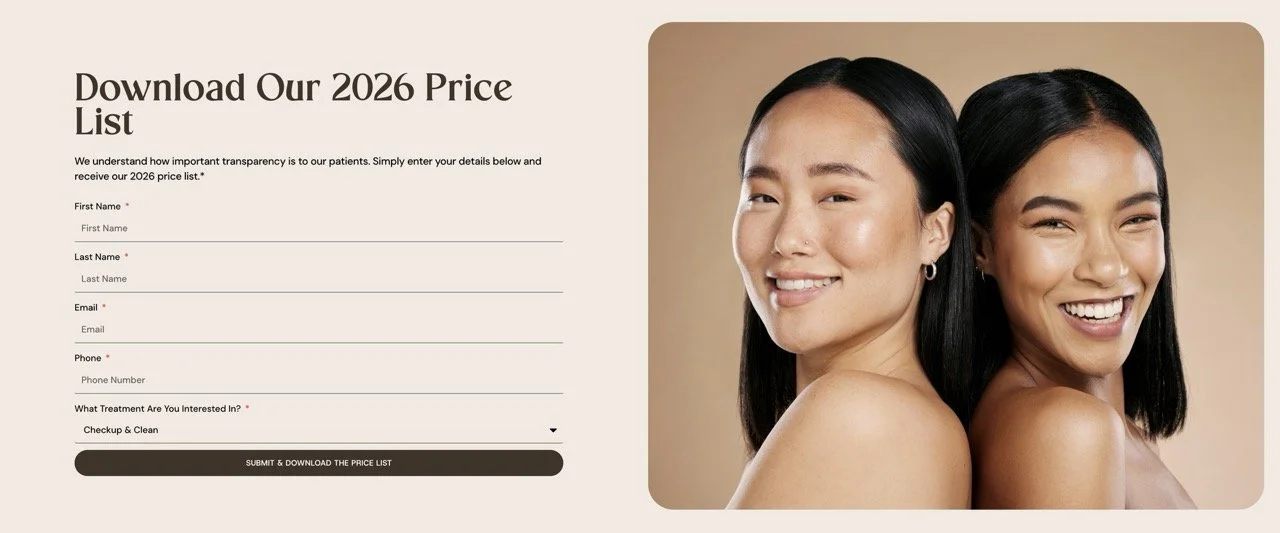
Price List lead magnet MOUD MEDIA integrated into our client’s website.
Why people research pricing before they enquire
Before anyone picks up the phone or fills out a contact form, they've usually spent time deciding whether the decision even makes sense.
Google's research into the "messy middle" of the purchase journey shows that buyers move between two mental modes before committing: exploration and evaluation. They search, compare, look for reassurance and repeat that loop until they feel ready to act.
Pricing is one of the main inputs in the evaluation phase. People want to know whether a service fits their budget, whether the offer is roughly in line with what they expected and whether a business feels like the right kind of fit, before they make contact.
A price list form sits directly in that window. It gives people what they're already looking for, and gives the business a reason to stay in contact while they're still deciding.
What the form actually did
We added a price list form to our client’s website. Instead of directing people to call for pricing, visitors could request a treatment price list by submitting their name, email and treatment interest. The form delivered the guide automatically and added each person to the clinic's database and added to an email automation segment based on the service they enquired about.
The result was 424 leads and 20% email list growth, without paid ads. But the more important detail is the intent behind those leads. Someone who requests a price list has already shown interest. They may not be ready to book, but they're further into the decision than a passive visitor who is just scrolling.
That difference in intent is what makes a price list form worth building.
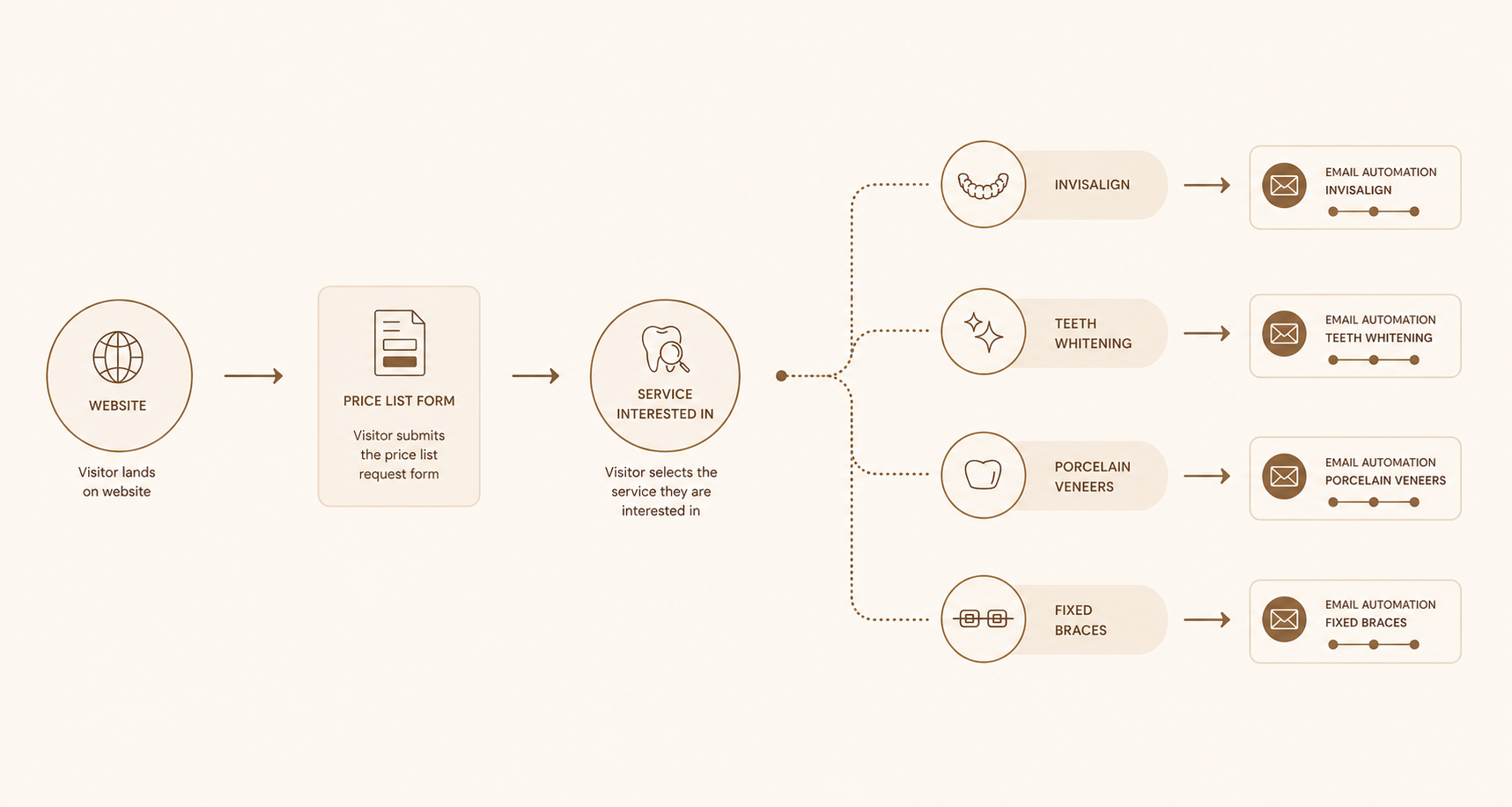
Price List Lead Magnet workflow integration with our custom made email automation sequence for our client.
The form has to be easy to complete
A price list form captures someone at a delicate moment. They're interested but not committed. A form that feels too long, too intrusive or unclear creates friction at exactly the point where the business should be building confidence.
Nielsen Norman Group's form usability research shows that shorter forms with visible labels and fewer unnecessary fields are completed more accurately and with less effort. Every extra field needs to earn its place. For most price list forms, name and email are enough. Treatment or service interest can be worth adding if it helps personalise the follow-up. Beyond that, there needs to be a specific reason.
One common mistake is using placeholder text inside fields instead of visible labels. Nielsen Norman Group has identified this as both a usability and accessibility issue: placeholder text disappears the moment someone starts typing, which increases cognitive load and makes errors more likely. Labels need to stay visible throughout.
A strategy that works for all service-based businesses
The mechanics here aren't specific to healthcare. Any service-based business where pricing plays a role in how people evaluate their options has the same opportunity. Beauty clinics, trades, photographers, allied health providers, consultants, wedding venues, legal firms, accounting practices, creative studios. Wherever people are asking what something costs before they commit to a conversation, there's a version of this worth building.
The format changes depending on the business. Some need a full treatment menu. Others need a starting-from guide, a service overview or a project investment breakdown. The principle stays the same: give people useful information while they're evaluating, and build a system that captures that interest rather than letting it pass.
The real opportunity
A price list form isn't a complicated idea. That's part of why it works.
It takes a question people are already asking and turns it into an intentional step in the customer journey. The person gets pricing clarity. The business gets a warmer lead. The follow-up becomes more relevant because the person has already shown what they're interested in.
For businesses that regularly field pricing questions, the infrastructure often already exists. The only thing missing is a system that captures that intent, rather than relying on someone to pick up the phone at the right moment.
MOUD MEDIA works with service-based businesses to build clearer pathways from attention to enquiry. From brand strategy and website design to lead magnet landing pages, price guide design, content and Meta Ads, we build marketing systems that feel considered from the first click to the final contact.
If people are already asking what it costs, your next lead magnet might be hiding in plain sight.
