
7 Signs Your Business Has Outgrown Its Brand
Why a rebrand could be the strategic move your business needs.
A strong brand should do more than look good. It should help people understand who you are, what you offer, why they should trust you and why they should choose you over someone else.
For many businesses, the problem is not the quality of the service. It is the way the business is being presented.
Your brand identity, website, photography, messaging and marketing all shape how people perceive your business before they ever enquire. If those touchpoints feel outdated, inconsistent or unclear, your business could be losing trust before the conversation even starts.
Research from McKinsey found that companies with strong design performance achieved significantly higher revenue growth and shareholder returns over a five-year period compared with their industry peers. In other words, design and brand experience are not just creative decisions. They can influence business performance.
So, how do you know when your business needs a rebrand?
Here are seven signs your brand may be holding you back.

1. Your brand no longer reflects the quality of your business
This is one of the biggest signs a business has outgrown its branding.
Maybe your business has matured. Maybe your prices have increased. Maybe your client experience, service offering or level of expertise has improved, but your brand still looks like the version of your business from three or five years ago.
This creates a perception gap.
Your business may be delivering a premium service, but if your logo, website, colour palette, typography, photography or social media presence feels dated, people may not immediately understand the level of value you provide.
A strategic rebrand helps close that gap.
It allows your business branding to reflect where you are now, not where you started.
2. Your website does not build trust quickly
Your website is often the first serious touchpoint someone has with your business.
Before they book a call, submit an enquiry or purchase from you, they are looking for signals. Are you credible? Are you professional? Do you understand their needs? Does your business feel established? Do you look like the right fit?
Stanford’s web credibility research found that website credibility is strongly influenced by design, usability, ease of contact and how professionally a business presents itself online. The research was based on three years of work involving more than 4,500 people.
This matters because your website design is not separate from your brand. It is one of the most important expressions of your brand.
If your website feels confusing, visually inconsistent or difficult to use, your brand may be creating doubt instead of confidence.
A strong website brand strategy should make your business feel clear, credible and easy to take the next step with.
3. Your messaging is unclear or inconsistent
If people land on your website or Instagram and still do not understand what you do, who you help or why you are different, your brand messaging needs work. Common signs of unclear brand messaging include:
Your homepage feels vague.
Your service descriptions are too broad.
Your social media content feels disconnected.
Your offer is hard to explain.
Your audience does not immediately know if your business is right for them.
Your copy sounds like every other business in your industry.
This is where brand strategy becomes essential.
A strong branding process should define your positioning, audience, tone of voice, key messages, service structure and customer journey before anything is designed.
When your brand messaging is clear, your marketing becomes easier. Your website becomes stronger. Your content becomes more focused. Your audience understands your value faster.
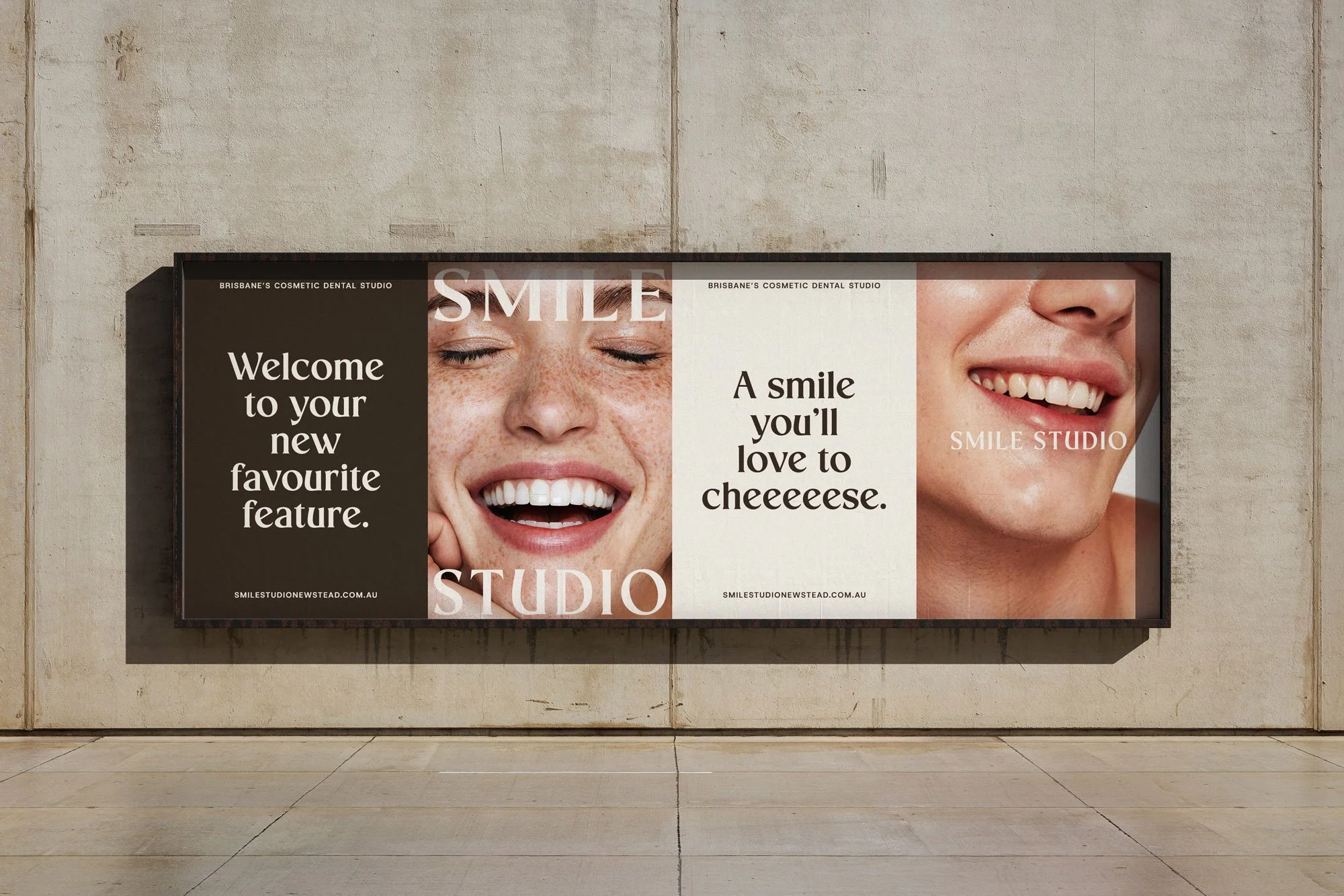
Rebrand for Smile Studio designed by MOUD MEDIA.
4. Your visuals feel inconsistent across platforms
If your website looks one way, your Instagram looks another way, your ads feel different again and your email marketing has no clear visual direction, your brand may lack cohesion.
Consistency builds recognition.
When someone sees your brand across multiple touchpoints, they should feel like they are experiencing the same business every time. That does not mean every piece of content needs to look identical, but it should feel connected.
This includes:
Logo usage
Colour palette
Typography
Photography style
Graphic design style
Social media templates
Website design
Email marketing
Ad creative
Tone of voice
Google’s research into purchase behaviour shows that consumers move through a complex “messy middle” of exploration and evaluation before making decisions. Google recommends that brands stay strategically present and compelling during this process.
Consistent branding helps you stay recognisable while your audience is comparing options.
If your brand presence feels scattered, a brand refresh or full rebrand can help create a more cohesive and memorable experience.
5. Your business has changed, but your brand has not
Businesses evolve. You may have changed your services, moved into a new market, refined your audience, increased your pricing, opened a new location, hired a team or shifted your business model. If your brand has not evolved with the business, it can start attracting the wrong people or underselling what you now offer.
This is especially common for service-based businesses, consultants, clinics, creatives, ecommerce brands and local businesses that started small but have since grown.
A rebrand may be needed if:
Your current brand attracts budget-focused clients, but you now offer a premium service.
Your visuals feel too DIY for the level of business you are building.
Your website does not explain your current services properly.
Your business has matured, but your brand still feels entry-level.
Your audience has changed.
Your offer has changed.
Your goals have changed.
A strategic rebrand is not about changing everything for the sake of it. It is about realigning your brand identity with the business you are actually becoming.
6. You are blending in with competitors
If your branding looks, sounds and feels like everyone else in your industry, your audience has no clear reason to choose you.
This is where many businesses struggle. They follow what competitors are doing, use the same language, choose safe colours, rely on generic templates and end up with a brand that feels familiar, but forgettable.
Strong brand positioning helps you stand apart.
It defines:
What you want to be known for
Who your ideal audience is
What makes your approach different
What emotional and practical value you offer
How your brand should look, sound and feel
Why people should trust you
Edelman’s 2024 brand trust research found that consumers who fully trust a brand are more likely to purchase, stay loyal and advocate for that brand. Trust is not built through one logo, one website page or one Instagram post. It is built through repeated, consistent brand signals.
If your business is not creating a distinct impression, your branding may need a more strategic direction.
7. Your brand is no longer supporting growth
A brand should make growth easier. It should help your business attract better clients, charge with more confidence, convert more enquiries and create a stronger first impression. If your current brand is making you feel hesitant to send people to your website, post on social media, run ads or pitch bigger opportunities, that is a sign it is no longer supporting the business.
Your brand should give you confidence. It should make your business feel established, intentional and ready for the next level.
A rebrand can help create the foundation for stronger marketing, better website conversions, more consistent content and a clearer customer journey.
For businesses investing in Meta Ads, Google Ads, SEO, email marketing or content creation, branding becomes even more important. Paid traffic can only do so much if the brand experience people land on does not build trust.
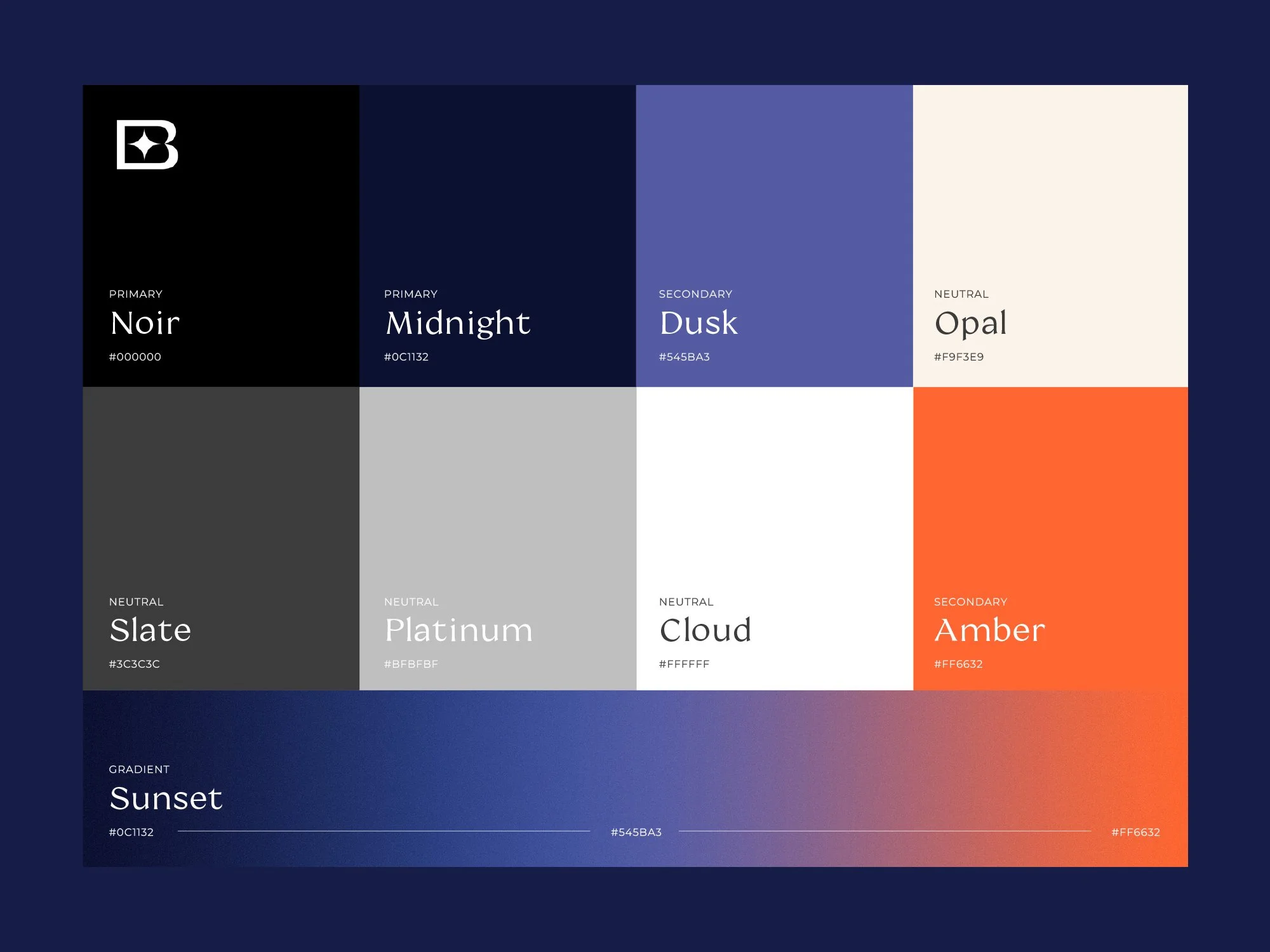
Rebrand for GLOWBORED PR by MOUD MEDIA.
What should a strategic rebrand include?
A proper rebrand should be more than a new logo.
A strong rebranding process may include:
Brand strategy
Brand positioning
Audience research
Competitor review
Tone of voice
Messaging framework
Logo design
Visual identity design
Colour palette
Typography system
Photography direction
Website design
SEO website copy
Social media direction
Content strategy
Brand guidelines
The goal is to create a brand system that works across every major touchpoint.
Your audience should experience the same level of clarity and quality whether they find you through Google, Instagram, a referral, a paid ad, an email campaign or your website.
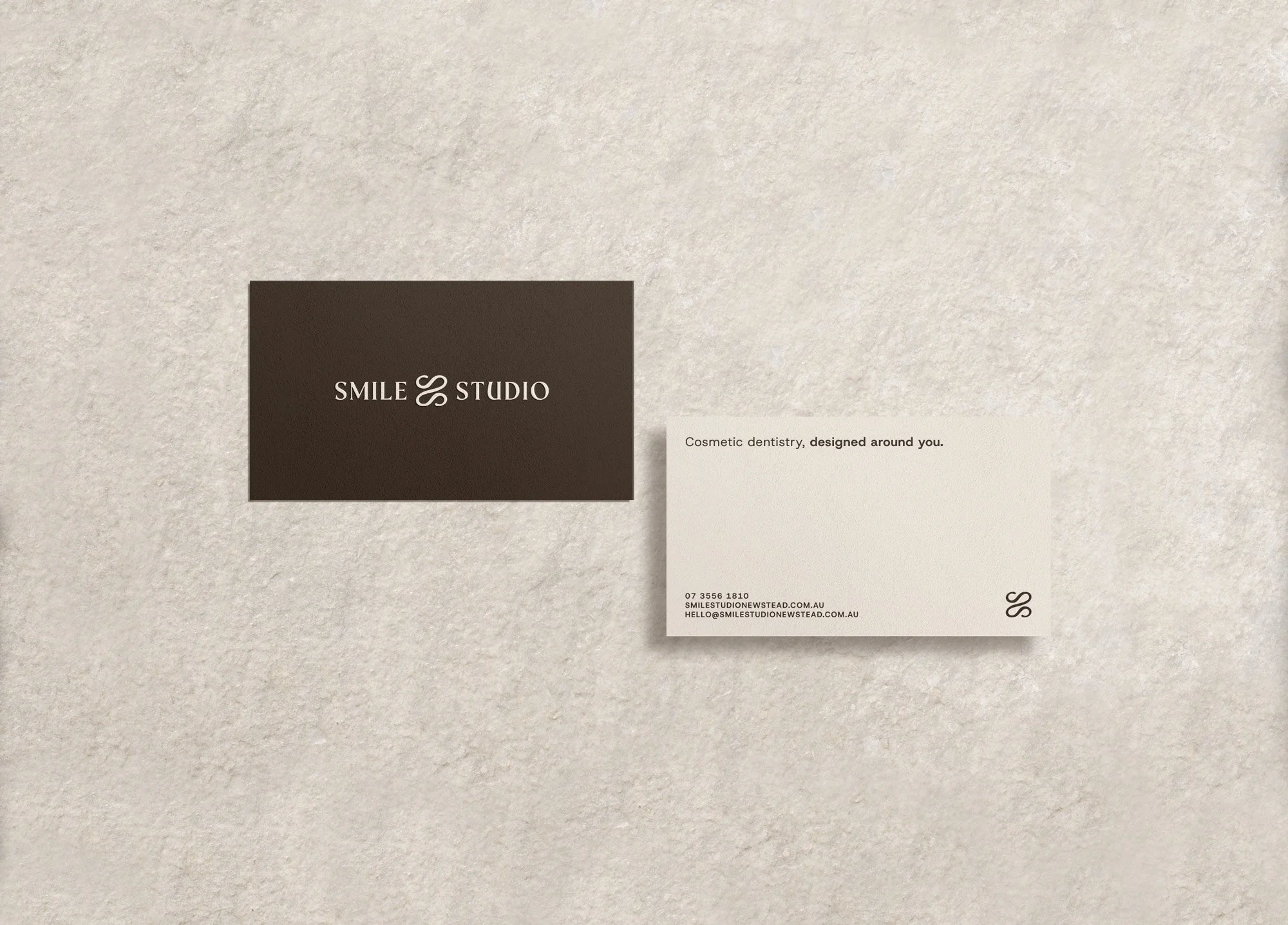
Business Card Design for Smile Studio by MOUD MEDIA.
Branding is not just how your business looks
Branding is how your business is understood. It shapes the way people perceive your value, your credibility and your position in the market. A strong brand can help a business look more established, communicate more clearly and convert with more confidence. A weak brand can create doubt, even when the business itself is excellent.
If your business has grown but your brand has not, it may be time to look at your identity, messaging, website and marketing through a more strategic lens.
Because the right brand does not just make your business look better. It helps your business make more sense to the people you want to reach.
Need help with branding or rebranding?
MOUD MEDIA is a Brisbane-based branding and marketing studio helping service-based businesses, start-ups and growing brands build clearer, more strategic brand identities.
From brand strategy and logo design to website design, photography, videography and Meta Ads, we help businesses create a more cohesive brand presence that looks premium, communicates clearly and supports growth.
If your business is ready for a brand refresh, rebrand or more strategic digital presence, we can help you build the next version with intention.
